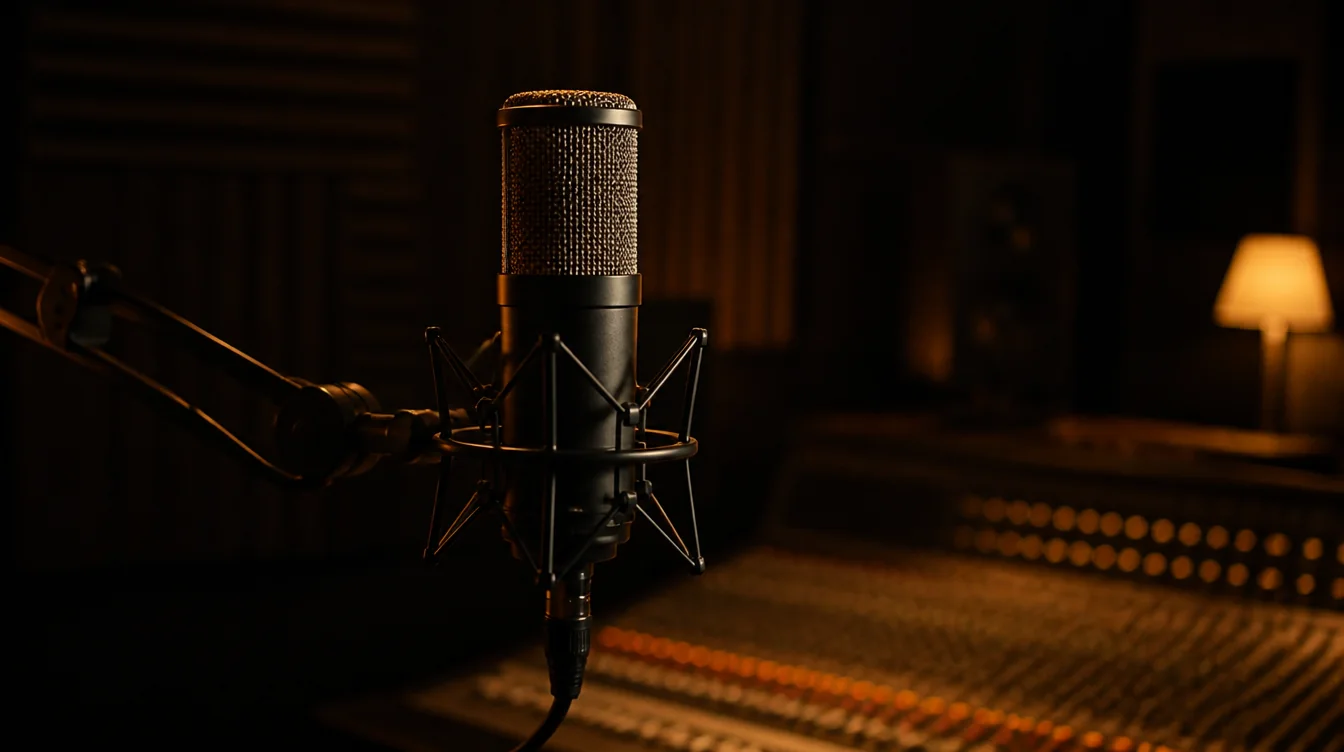
A large-diaphragm condenser microphone on a boom arm in warm low light, with a mixing console glowing softly out of focus behind it

NYONIC/Audio production

Audio — Podcasts, voiceover and post

Sound is half
of the picture.

Audiences forgive a soft image. They do not forgive bad audio — they leave. I spent twenty years mixing commercial work that had to hold up on a laptop speaker, a car stereo and a phone in a loud room, and I take that work on its own now.
Call (585) 524-8976 Or email me →

People stop watching because of sound, not picture.

A slightly soft, slightly flat image reads as a style choice. Room echo, a hum under the voice, or levels that jump between two speakers reads as amateur, and it is the fastest way there is to lose somebody in the first ten seconds.

It is fixable, and most people never bother, because audio is invisible when it is right. Nobody has ever finished a video and said the mix was good. They just watched the whole thing.

Podcasts have the same problem at ten times the length. An hour of unbalanced, unedited conversation is an hour of small irritations, and listeners quietly stop coming back without ever telling you why.

What actually loses listeners

Room echo
Reads as amateur within seconds, and resists fixing
Level jumps
Every time a viewer touches the volume, you nearly lost them
Hum and hiss
Invisible until removed, then obvious in hindsight
Dead air
The single biggest reason podcast listeners drift away

How it works

Three steps, no studio visit.

Send the audio

Raw tracks, a call recording, or the video with sound attached. Separate tracks per speaker if your setup captures them.

I edit and mix

Cleanup, dialogue edit, balance, and a mix built for wherever it actually gets played.

You publish

Delivered at the right loudness target for the platform, in the formats you need.

What you get

  • Dialogue editing — ums, false starts, crosstalk and dead air removed without making it sound edited
  • Noise, hum and room reflection reduced, and levels matched between speakers so nobody reaches for the volume
  • A mix that holds up on a phone speaker, earbuds and a car stereo, not only on studio monitors
  • Loudness normalised to the correct target for where it publishes — broadcast, podcast platforms or social
  • Music and sound design where it earns its place, licensed and cleared for how you will actually use it
  • Voiceover recorded and directed, or cast and directed if you need a specific voice

Cover image is an illustration produced in-studio, not a client deliverable. Mixes I have cut are available on request.

Delivered

Podcast
−16 LUFS stereo, chapter-ready, per-episode or ongoing
Broadcast
−24 LUFS, spec-compliant for air
Social
Mixed loud and clear for phone speakers
Stems
Separate dialogue, music and effects on request

Pricing

Every project is quoted.

Audio work prices on runtime, on the condition of what you send me, and on whether it is a one-off or a standing arrangement.

Factor 01
Length
how much material there is

A 60-second spot and a weekly 90-minute conversation are different amounts of hands-on time. Runtime is the biggest single driver.

Factor 02
Condition
what the source actually sounds like

Two clean lav tracks recorded in a quiet room mix quickly. One shared mic in a busy restaurant takes real work, and sometimes cannot be fully rescued.

Factor 03
Cadence
one-off or ongoing

A single episode prices as a project. A weekly show prices as a standing arrangement, and it costs less per episode because the setup only happens once.

No published rate card, because a rate card either overcharges the small job or underprices the big one. Email me the scope or call and you will have a number, not a meeting.

Questions

Before you get in touch.

What do you need from me?

The rawest files you have — separate tracks per speaker if your setup records them, and the unprocessed versions rather than anything already run through an “enhance” button. Processing is far easier to add than to undo.

Can you save audio that was recorded badly?

Often, partly. Hum, hiss, background noise and uneven levels are usually fixable. Heavy room echo and clipped, distorted recording are the two that resist, because the information simply is not in the file. I will tell you what a recording can and cannot become before you pay for it.

Do you edit podcasts on an ongoing basis?

Yes, and that is the arrangement that makes sense for a show. Once the sound of your podcast is dialled in, every episode after that is faster, cheaper and more consistent.

Do you write or record voiceover?

I record and direct it, and I can cast it if you need a particular voice. I will also tell you when your own voice is the better choice, which for a founder talking about their own business it usually is.

Do you handle music licensing?

Yes. Anything I put under your project is licensed for how you actually intend to use it, and you get the documentation. Dropping in a track you found on YouTube is how a video gets muted three weeks after it starts working.

Can you do audio for video you did not shoot?

Yes, and a lot of this work is exactly that. Send the locked cut and the audio tracks and I will treat it as a post job.

Send me two minutes.

Send a couple of minutes of your worst-sounding audio. I will clean it up and send it back, so you can hear the difference before you spend anything.

(585) 524-8976

or jason@nyonic.com

Also from NYONIC

A cinema camera on a tripod in a darkened studio lit by a single amber softboxProductionVideo productionBrand films, commercials, testimonials and events.See video production →A studio wall of overlapping pinned photographic prints under raking lightGrowthOnline marketingPaid social, content, email and lead generation.See online marketing →The Pizza Shoppe website, one of twelve live buildsWebWeb developmentTwelve live builds. Fast sites and landing pages.See web development →