NYONIC/App development
Apps — Web and desktop software
The thing your business actually runs on is probably a spreadsheet with too many tabs, a shared doc nobody fully trusts, and one person who knows how it works. I build the software that replaces it — and I ship my own products, so you are hiring somebody who has taken this all the way to a paying customer.
Shipped products
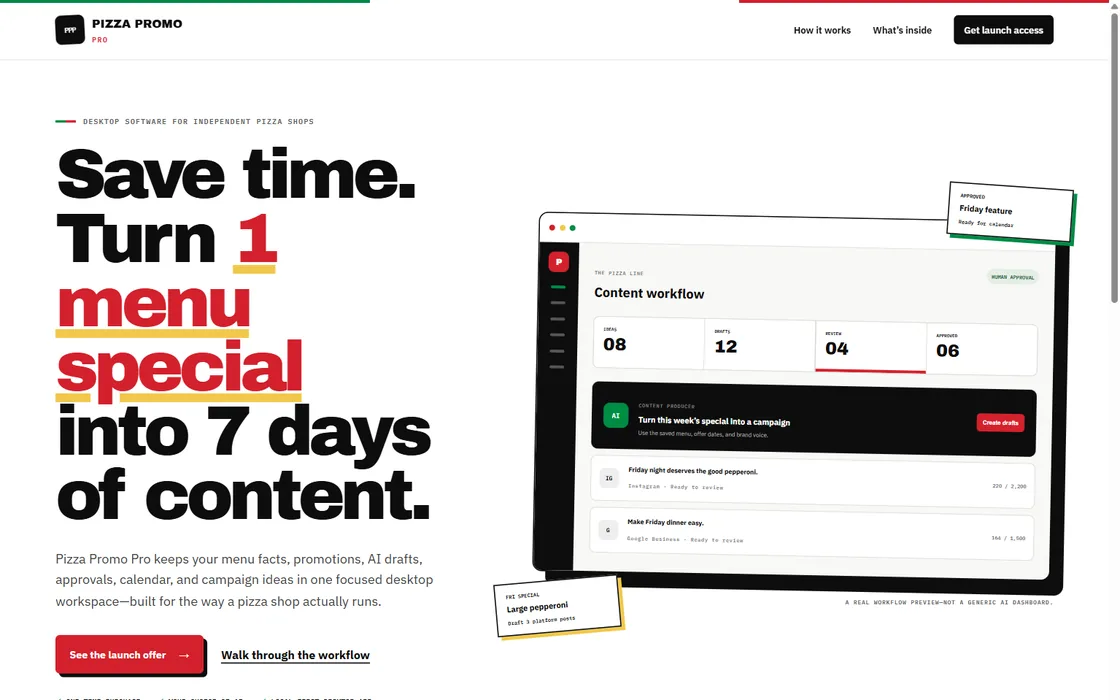
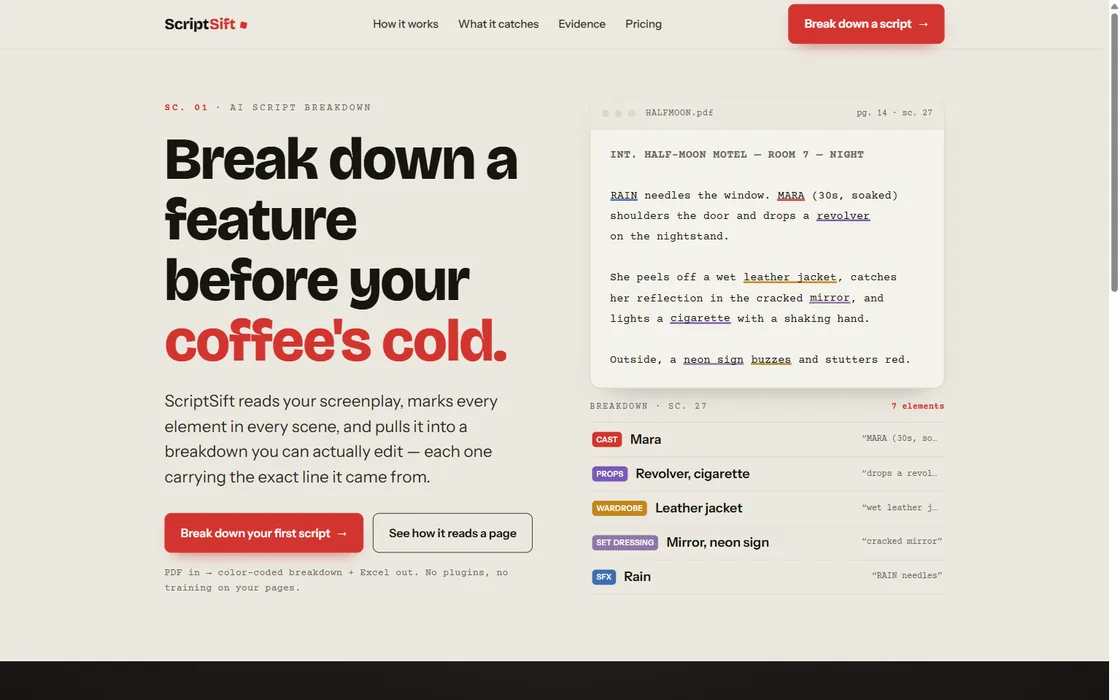
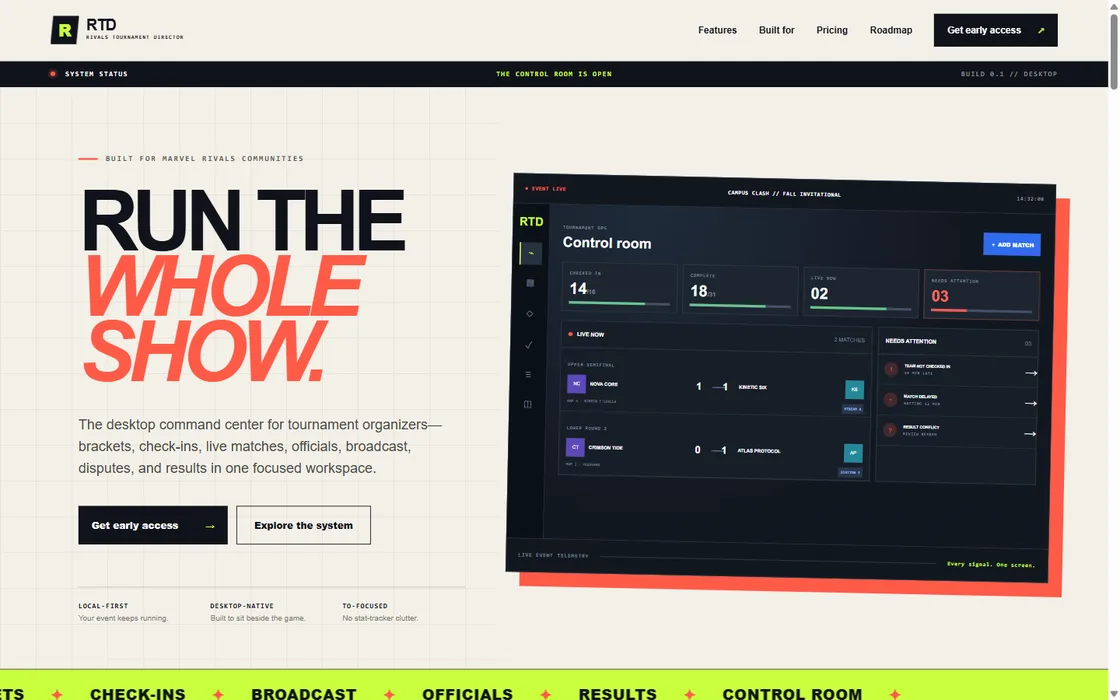
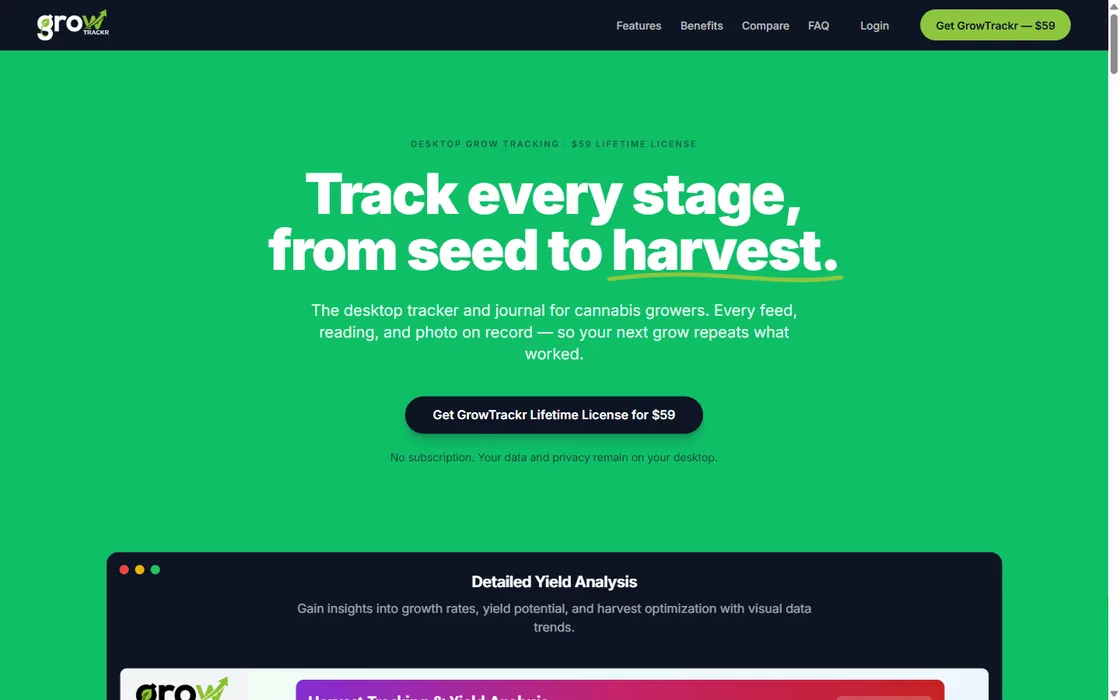
Not case studies and not prototypes — software I designed, built, shipped and still maintain. Three are local-first desktop apps sold outright; one is a web app with accounts, file handling and an AI pipeline. Open any of them.
These are NYONIC's own products. They are here as evidence of what one person can ship end to end, not as client work.
Everyone has heard the story: eighteen months, six figures, a team that turned over twice, and a tool nobody ended up using. That happens because the people specifying it, the people building it and the people who will actually use it are three different groups, and every layer between them costs a little more clarity.
So most small businesses settle for the other thing — four SaaS subscriptions that each do about seventy percent of the job, with a spreadsheet bridging the gap. That works right up until the gap is the business.
I build and ship my own products. GrowTrackr, Pizza Promo Pro, ScriptSift and Rivals Tournament Director are live, paid for, and maintained by one person. That is the same discipline a build for you gets: scoped to what you will genuinely use, in your hands in weeks, and yours to keep.
What usually needs replacing
How it works
Usually the spreadsheet tells us. What people actually do, rather than what the written process says they do.
Something real in weeks, not a specification document. You are using it before it is finished, because that is the only reliable way to learn what it should be.
The parts that get used get polished. The parts that do not get cut before they cost you anything to maintain.
Cover image is an illustration produced in-studio. The actual work is the four products above.
Built and shipped
Pricing
Software prices on what it has to run on, how much data it has to model, and what happens after launch. Tell me the process you want replaced and I will come back with a shape and a number.
A web app anyone can open and a local-first desktop app your team installs are different builds with different economics. Desktop suits software sold outright; web suits anything genuinely multi-user.
A single-purpose internal tool is days of work. Multi-user data with permissions, history and reporting is where the real hours are, and it is worth being honest about which one you need.
Software is never finished. Some clients want a clean handover and no ongoing cost; some want me on call. Both are fine, and they price differently.
No published rate card, because a rate card either overcharges the small job or underprices the big one. Email me the scope or call and you will have a number, not a meeting.
Questions
A focused internal tool is usually three to six weeks to something your team is genuinely using. Larger builds get split so you have something working early rather than everything at the end. If someone quotes you eighteen months, ask what you get in month two.
React and Next.js on the web, Postgres for data, and desktop builds when the software should run on someone's own machine. Deliberately boring, well-supported choices, because the point is that it still runs in five years without me.
Yes, and for some businesses it is the better answer. GrowTrackr and Pizza Promo Pro are both local-first desktop apps sold for a one-time price — no subscription, no cloud dependency, and the customer's data stays on their own machine. That model is unfashionable and customers like it a lot.
Yes, and I will also tell you when the honest answer is that you do not need one. ScriptSift is an AI pipeline end to end, and the hard part was never the model — it was guaranteeing it cannot invent anything. If an AI feature's output cannot be checked against a source, it cannot be trusted, and I will not ship it that way.
You do. Source, schema and deployment all go to you, in your own accounts. I am not interested in holding a business hostage to its own tooling.
A fair question, and you should ask it of any solo builder rather than accept a reassuring answer. The mitigations are structural: a conventional stack, no exotic dependencies, a documented schema, the code in your repository and the infrastructure in your name. Another developer can pick it up without archaeology. That is a design constraint I work to, not a promise I am asking you to take on faith.
Tell me about the process held together with tabs and one person's memory. I'll tell you honestly whether it's worth building — and if it isn't, what to use instead.
(585) 524-8976Also from NYONIC